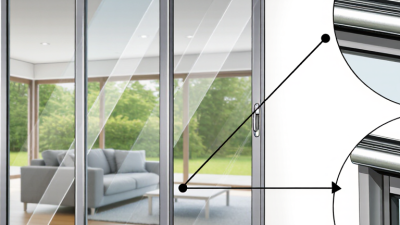
Choosing a window manufacturer in China involves more than comparing prices. Product quality, technical support, customization, and clear communication all matter. For homeowners, builders, and sourcing teams, the right partner can help turn a renovation plan into windows that fit the opening, climate, and daily routine. A quiet room matters. So does a frame that closes smoothly after years of use.
This guide to top home improvement window manufacturers in China introduces the factors worth checking before requesting a quote. These include material options, glazing, hardware, energy performance, production capabilities, and quality-control practices. Ask for product specifications and samples where possible. Review installation guidance, warranty terms, and the supplier’s experience with projects similar to yours. A polished catalogue is useful, but it cannot answer every practical question.
No shortlist is perfect. Manufacturers differ in strengths, and the lowest quote may leave important details unclear. Confirm measurements, finishes, packaging, lead times, and after-sales support in writing. If performance claims are made, ask what testing or documentation supports them. Those small checks can prevent costly surprises when frames arrive on site. This overview offers a starting point, not a substitute for project-specific research. Compare carefully, and choose home improvement windows that suit the building—not just the brochure.

China’s home improvement window manufacturing industry is moving from volume production toward measurable performance. The National Bureau of Statistics reported a 66.16% urbanization rate in 2023. This supports steady demand for replacement windows, balcony enclosures, and energy-saving renovations.
Manufacturers now focus on thermal breaks, multi-chamber profiles, low-emissivity glass, and tighter hardware systems. The International Energy Agency reports that buildings account for about 30% of global final energy use. This makes window insulation a practical renovation concern, not merely a design preference. In factory inspections, buyers should check profile thickness, corner welding, glass certification, and air-tightness test records. Small details matter.
China’s supply chain also benefits from large-scale aluminum processing, glass production, and automated assembly. However, capacity alone proves little. A 2024 market review by Grand View Research identifies energy efficiency and renovation as major drivers in the global windows market, but national figures can hide uneven quality between factories. That gap deserves attention. Some producers document performance carefully; others still rely too heavily on attractive samples and broad claims. Reliable suppliers should provide test results, batch traceability, installation guidance, and project references. The industry is improving, though consistency remains unfinished.
Chinese manufacturers produce a wide range of window styles for homes, apartments, and renovation projects. Sliding windows move along horizontal tracks, making them useful where an inward-opening sash would take up room. Casement windows hinge at the side and open outward, allowing broad ventilation. Awning windows hinge at the top, helping shield a partly open sash from light rain. Fixed windows do not open. They suit stairwells and living areas where daylight matters more than airflow.
Frame materials shape performance and upkeep. Aluminum frames are slim and sturdy, while thermal-break designs add an insulating barrier between inner and outer sections. uPVC frames resist moisture and need little painting, though appearance and hardware quality vary. Some factories also make timber or aluminum-clad timber windows for projects seeking a warmer interior finish. Tilt-and-turn systems offer two opening positions, but their fittings need careful adjustment. The terminology can be messy. A “sliding window” may use different track and locking systems, so buyers should check drawings, sample operation, and glass specifications rather than rely on the style name alone. For a real home, confirm opening direction, frame depth, drainage details, and installation measurements before ordering. Small mismatches can cause drafts or difficult operation.
China’s leading home improvement window manufacturers serve a market shaped by varied climates, building styles, and renovation budgets. Strong suppliers do more than produce frames. They help buyers match glazing, hardware, and opening styles to the building’s needs.
Look closely at the details. Ask how frame corners are joined, how drainage channels handle heavy rain, and whether seals remain replaceable. Request performance data for air leakage, water resistance, and insulation, then check that test conditions match your project. A showroom sample can reveal finish quality, but it cannot prove long-term performance. Ask to inspect a completed installation or speak with a recent customer, where possible.
Reliable manufacturers should explain lead times, customization limits, packaging, and after-sales support in plain language. Clear drawings matter. So do written specifications, especially when a project includes unusual openings or coastal exposure. Compare more than the quoted price: confirm glass thickness, locking points, installation responsibilities, and warranty coverage. I would not assume that a polished catalog means consistent production; that is an easy mistake. Factory visits and independent testing may help, though neither removes every risk. A careful shortlist should reflect the project’s actual requirements, not just a supplier’s broad claims.
Top Home Improvement Window Manufacturers in China
China’s leading window manufacturers serve projects with varied climates, budgets, and design needs. Common materials include uPVC, thermal-break aluminum, fiberglass, and engineered wood. Aluminum suits large openings, while uPVC can provide strong insulation at a lower cost. Low-E glass, argon-filled cavities, and warm-edge spacers improve indoor comfort. However, glass performance depends on the complete window system, not one feature.
Advanced factories often use CNC cutting, automated welding, and digital quality tracking. These technologies can improve accuracy, but automation does not replace careful inspection. Check frame dimensions, corner joints, drainage holes, seals, and hardware alignment. Reliable suppliers should provide test reports for air leakage, water resistance, wind pressure, and thermal performance. Review applicable Chinese GB/T standards, alongside EN, ASTM, or project-specific requirements. Certificates alone are not enough. Ask whether the tested configuration matches your actual window design.
Tips: Request samples before placing a large order. Test the locking handle and inspect gasket contact around each corner. Confirm glass thickness, coating position, spacer type, and warranty terms in writing. Factory videos look convincing, yet independent inspection is still valuable. A small defect may become a serious draft after winter. No manufacturer is flawless. The better question is how clearly the factory finds, records, and corrects mistakes.
Approximate center-of-glass U-values for common glazing configurations. Lower U-values indicate better insulation. Actual performance varies with glass coatings, gas fills, spacer design, and testing conditions; whole-window ratings also include the frame.
Top Home Improvement Window Manufacturers in China
How to Evaluate and Select a Chinese Window Manufacturer
Selecting a Chinese window manufacturer requires more than comparing online prices. Check how long the factory has produced similar systems and which markets it serves. Request project references with installation photos, product sizes, and climate details. A reliable supplier should explain profiles, glass specifications, hardware, drainage, and expected service life clearly.
Ask for recent test reports from accredited laboratories, not screenshots with missing dates. Confirm the report matches your exact window design. Review thermal transmittance, air leakage, water resistance, wind-load performance, and acoustic ratings. Samples should include corner joints, seals, screens, and locking points. Open and close them repeatedly. Small defects often appear after regular handling.
Factory verification matters. A live video tour can show cutting areas, welding equipment, glazing lines, storage conditions, and quality checkpoints. An independent inspection is stronger when the order is large. Define profile tolerances, glass thickness, color, packaging, replacement parts, and inspection rules in the contract. Confirm whether the quoted price includes delivery, export packing, and technical drawings. I once trusted a polished sample too quickly; the production batch used a weaker finish. That mistake changed my process. Now I compare approved samples with random finished units before shipment. The cheapest offer may still be expensive. Look for documented control, responsive communication, and evidence that matches the promised specification.
| Evaluation Dimension | Suggested Weight | What to Evaluate | Evidence to Request | Practical Selection Check |
|---|---|---|---|---|
| Product and project fit | 15% | Whether the manufacturer can supply the required window types, opening styles, dimensions, finishes, glazing, hardware, and installation details. | Product catalogue, technical drawings, configuration schedule, and samples or completed-product photographs. | Confirm that the proposed configuration matches the project drawings and local building requirements before comparing prices. |
| Performance test evidence | 15% | Air leakage, water penetration, wind-load resistance, thermal performance, and acoustic performance where these are relevant to the project. | Reports from a qualified testing laboratory that identify the tested product configuration, test methods, results, and report date. | Check that the tested frame, glass, hardware, size, and construction are comparable to the products being quoted. Do not rely on a test report for a different configuration. |
| Standards and compliance | 12% | Whether products and documentation address the applicable Chinese requirements and the destination market’s building, safety, and energy rules. | Relevant declarations, product documentation, test reports, and a written list of standards or regulations the supplier says apply. | Verify the requirements for the installation location independently; requirements vary by product type, project, and destination market. |
| Materials and component specifications | 10% | Frame material and wall thickness or profile specification, glass build-up, seals, surface finish, drainage design, and hardware specification. | Bill of materials, profile and glass specifications, hardware schedule, finish samples, and approved-substitution policy. | Put component specifications and any permitted substitutions in the purchase contract rather than relying on general product descriptions. |
| Manufacturing and quality control | 10% | Documented incoming-material checks, production inspections, finished-product checks, traceability, and procedures for handling defects. | Quality-control procedures, sample inspection records, corrective-action examples, and details of product identification or batch records. | Ask how the supplier records inspection results and resolves nonconforming products; arrange an inspection plan for the order if needed. |
| Customization and technical support | 8% | Ability to review project drawings, confirm dimensions and interfaces, provide shop drawings, and manage design changes. | Sample shop drawings, technical submittals, drawing-approval process, and a named technical contact. | Require written approval of final drawings, dimensions, finishes, and hardware before production begins. |
| Export and logistics readiness | 8% | Experience preparing export documentation, protective packaging, shipment plans, and delivery schedules for the destination market. | Redacted shipping-document examples, packaging specifications, proposed delivery schedule, and written shipping-term assumptions. | Confirm who is responsible for export clearance, freight, insurance, import duties, and damage reporting under the agreed trade terms. |
| Warranty and after-sales support | 7% | Warranty duration and scope, exclusions, claim process, replacement-parts availability, and support for installation or product issues. | Written warranty terms, service contact details, claims procedure, and spare-parts policy. | Check whether the warranty covers the product, finish, glass, and hardware separately, and clarify who handles labor and shipping costs. |
| Quotation transparency and total cost | 8% | Whether the quotation clearly separates product options, glazing, hardware, packaging, tooling, freight, and other charges. | Itemized quotation, stated currency and validity period, payment schedule, and a list of inclusions and exclusions. | Compare quotations using the same dimensions, specifications, delivery terms, and scope; a lower initial price may exclude important items. |
| Communication and project management | 7% | Clarity and consistency of responses, document control, escalation process, and ability to keep the buyer informed about approvals and production milestones. | Communication plan, milestone schedule, document-revision process, and designated project contacts. | Use a trial technical exchange or sample-order discussion to assess response quality before committing to a large order. |
| Suggested total | 100% | Weights are a buyer-side comparison framework, not a certification or ranking. Adjust them to reflect project priorities, local regulations, and procurement risks. | ||