How to Choose the Best Noise Reduction Windows?
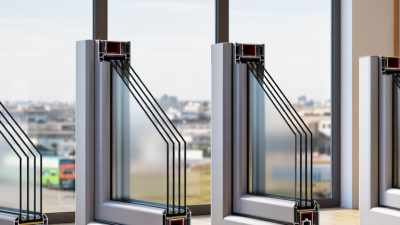
Choosing the right noise reduction windows begins with understanding the sound around your home. Traffic, aircraft, construction, and low-frequency music behave differently. A busy road may require laminated acoustic glass, while occasional neighborhood noise may need better seals and carefully fitted frames. Glass thickness matters. So does the air gap between panes.
Dr. Lily M. Wang, an acoustical engineer and professor known for her work in building acoustics, has said, “Window performance must be judged as part of the whole façade, not in isolation.” That principle is easy to overlook. Even excellent noise reduction windows can disappoint when walls, vents, doors, or installation gaps transmit sound. The quietest glass cannot repair a poorly sealed frame.
This guide will examine sound transmission ratings, laminated glass, double and triple glazing, frame materials, and professional installation. It will also consider bedroom comfort, street-facing rooms, ventilation needs, and realistic budgets. A higher price does not always guarantee better results. Sometimes, the strongest specification is unnecessary for the actual noise problem.
Measure the noise first.
Ideally, compare products using tested acoustic ratings rather than attractive marketing claims. Remember that laboratory performance may differ from real-world results. That difference deserves honest attention. The best choice balances decibel reduction, daylight, thermal efficiency, appearance, maintenance, and long-term value. A quieter room should still feel natural, comfortable, and practical.

Assess Noise Sources Using Frequency Bands, dB Levels, and STC Ratings
How to Choose the Best Noise Reduction Windows?
Begin with the noise source, not the window label. Record traffic, voices, aircraft, or machinery at different times. A phone meter can reveal patterns, but it is not laboratory equipment.
The World Health Organization recommends road traffic exposure below 53 dB Lden and 45 dB Lnight (WHO Environmental Noise Guidelines, 2018).
Those targets describe outdoor exposure, not guaranteed indoor comfort. Still, they provide useful context.
Frequency matters. Speech and horns usually occupy mid-frequency bands. Trucks, buses, and construction equipment produce stronger low-frequency energy. Standard STC ratings mainly evaluate transmission loss from 125 to 4000 Hz, according to ASTM E413.
STC 35
may reduce speech noticeably, while
STC 45
offers stronger separation. Yet STC can underrepresent deep traffic rumble. Check the
OITC rating too, which evaluates broader outdoor noise performance under ASTM E1332. Higher is generally better. Not always enough.
Compare measured dB levels with the window’s tested rating, then inspect the entire opening. A high-rated pane can underperform when seals are loose or frames leak air. Ask for laboratory test reports, test conditions, and installation details. Look for frequency-band data, not only one impressive number. The National Institute for Occupational Safety and Health treats 85 dBA over eight hours as a recommended exposure limit, but home comfort needs are more personal. A quiet bedroom may require less reduction than a home office beside a busy road.
I would not choose by STC alone.
Real buildings are imperfect.
Compare STC 30–40, 40–50, and 50+ Window Performance Classes
Choosing noise reduction windows starts with understanding STC, or Sound Transmission Class. It measures how well a window reduces common indoor airborne noise. STC 30–40 windows can soften voices, light traffic, and distant neighborhood sounds. They suit bedrooms facing quieter streets. However, loud motorcycles may remain clearly noticeable.
STC 40–50 windows provide stronger control. They can reduce traffic noise, conversations, and general urban activity more effectively. This range often fits homes near busy roads or schools. STC 50+ windows offer the highest tested performance. They are useful beside airports, rail lines, or commercial areas. Yet higher ratings do not guarantee silence. Low-frequency engines can still pass through walls, roofs, or ventilation openings.
Tips: Compare laboratory test reports, not sales descriptions alone. Ask whether the rating covers the complete window assembly. Glass thickness, air gaps, laminated layers, and compression seals all matter. Professional installation is equally important. A small gap around the frame can weaken expensive glazing. In my experience, people often choose STC 50+ without checking the building envelope. That can waste money. Consider the loudest sound, its frequency, and the room’s actual exposure. Test samples if possible, because laboratory results may not match an imperfect wall or aging frame.
How to Choose the Best Noise Reduction Windows? - Compare STC 30–40, 40–50, and 50+ Window Performance Classes
| Performance Class |
Typical Tested STC Range |
Approximate Indoor Sound Level*
from 75 dB Outdoor Noise |
Common Noise Conditions |
Typical Window Approaches |
Expected Acoustic Benefit |
Best-Fit Applications |
Important Limitations |
STC 30–40
Standard noise reduction |
30–40 |
Approximately 45–55 dB |
General neighborhood activity, speech, moderate road traffic, lawn equipment at a distance |
Well-installed single glazing or basic insulated glazing; ordinary operable window systems with effective weather seals |
Reduces everyday outdoor noise, but traffic peaks and low-frequency sounds may remain noticeable |
Suburban homes, offices away from major roads, bedrooms with moderate exterior noise |
Gaps around the frame, open vents, lightweight walls, and poorly sealed joints can significantly reduce the real-world result |
STC 40–50
Enhanced noise reduction |
40–50 |
Approximately 35–45 dB |
Busy urban streets, frequent buses and trucks, construction activity, loud conversations nearby |
Asymmetrical insulated glazing, laminated glass, wider air spaces, and acoustically rated frames with compression seals |
Noticeably quieter interior; voices and mid-frequency traffic noise are substantially reduced when installation is airtight |
Urban residences, street-facing bedrooms, schools, clinics, and offices near arterial roads |
The complete wall and window assembly must be considered; a high-rated window cannot compensate for weak surrounding construction |
STC 50+
High-performance noise reduction |
50 and above |
Approximately 25 dB or lower |
Heavy traffic, rail corridors, aircraft noise, entertainment venues, industrial or mechanical equipment |
Specialized laminated glazing, multiple air spaces, secondary interior windows, and fully sealed fixed or acoustically engineered systems |
Provides strong reduction of many speech and mid-frequency sounds; low-frequency rumble may still be audible |
Homes and facilities in high-noise zones, recording or broadcast spaces, noise-sensitive rooms, and buildings near transport infrastructure |
Often requires specialist design, precise installation, airtight construction, and acoustic treatment of walls, doors, roofs, and ventilation openings |
Technical notes:
- STC is a laboratory rating that summarizes airborne sound insulation, mainly across speech-related and mid-frequency ranges. It is not a direct measurement of perceived loudness.
- A difference of 10 STC points is commonly associated with a large improvement in sound isolation, but the audible result depends on the noise spectrum, room conditions, and construction quality.
- The indoor sound-level figures are simplified illustrations based on the outdoor level minus the STC value. Actual results can differ because STC is not a universal reduction value at every frequency.
- For aircraft, rail, buses, and other low-frequency sources, ask for frequency-specific laboratory data, such as OITC, in addition to STC.
- Always verify the tested rating for the complete window assembly, including glazing, frame, seals, vents, configuration, and installation details.
Select Laminated Glass with 0.76 mm PVB for Improved Sound Control
How to Choose the Best Noise Reduction Windows?
Select laminated glass with 0.76 mm PVB for improved sound control. This interlayer helps reduce traffic noise, voices, and sharp outdoor sounds. It holds glass layers together and dampens vibration more effectively than ordinary single glazing. The result can feel noticeable beside a busy road or school.
Glass alone is not enough. A poorly sealed frame can weaken the entire window’s performance. Check the acoustic rating, frame material, opening design, and perimeter seals before ordering. Larger air gaps between panes may also improve insulation, depending on the complete window system. Installation matters greatly. Small gaps around the frame can let sound enter like a narrow open door. It is not a perfect fix. Low-frequency engine noise may still pass through, especially in lightweight walls.
Tips:
Ask for tested sound-control data for the full window, not only the glass. Inspect the sample for visible edge quality and even lamination. Use professional installation with continuous seals. Curtains may soften indoor echoes, but they cannot replace acoustic glazing. Measure the room’s noise at different times, because morning traffic and nighttime machinery can create very different results.
Verify OITC Ratings, Frame Seals, and Whole-Window Acoustic Tests
Choosing noise reduction windows starts with the OITC rating, not the glass thickness alone. OITC measures outdoor-to-indoor sound transmission, including lower-frequency traffic noise. ASTM E1332 provides the laboratory framework for this rating. A higher number usually means better protection, but ratings are not perfectly comparable across every product configuration. Ask for the tested size and exact glazing specification.
Frame seals deserve equal attention.
Continuous compression seals should meet tightly at corners, locks, and meeting rails. A small gap can undermine expensive laminated glass. During inspection, look for daylight around the sash. A smoke pencil can also reveal moving air near the frame. This practical check is imperfect, but it often exposes installation problems that product literature misses. Do not accept a glass-only acoustic claim.
Request a whole-window acoustic test, preferably using ASTM E90 laboratory methods and clearly documented mounting conditions. The test should include the frame, seals, hardware, and glazing together. Compare the reported OITC value with your actual noise source. The World Health Organization’s Environmental Noise Guidelines for the European Region recommend keeping road-traffic exposure below 53 dB Lden and night exposure below 45 dB Lnight. That target is not a window guarantee. It is a reminder to measure the room, road, and installation together. A field test under ASTM E336 can reveal weaker performance than the laboratory result. That difference should prompt questions, not blind confidence.