1800 84 90 84 sale@doornosh.com

2026 Top Soundproof Windows for Global Buyers

Choosing the right soundproof windows in 2026 requires more than comparing product photos or attractive claims. Global buyers face different noise conditions, building styles, climate zones, and testing standards. A window designed for heavy traffic may not perform equally well against aircraft noise or low-frequency machinery.

This guide examines practical features that influence acoustic performance, including laminated glass, insulated glazing units, frame materials, airtight seals, and professional installation. Small gaps around the frame can weaken an otherwise advanced window. That detail matters. On a busy street, the difference may be felt during early morning deliveries, passing buses, or nighttime rain.

Reliable selection begins with verified test data. Look for documented STC, OITC, or regional acoustic ratings, then confirm how those results apply to your building. Ratings can vary between laboratories and countries. A certified product is useful, but it is not a guarantee of silence. No window blocks every sound.

That assumption fails.

My experience with renovation projects shows that installation quality often determines the final result. Wall construction, ventilation openings, neighboring windows, and roller shutters may also create sound paths. This article compares leading soundproof windows for international buyers, while recognizing that performance, availability, warranty support, and local compliance differ by market. Some recommendations may need further testing in real buildings. That is an important limitation, not a weakness to hide. Reliable decisions come from matching measured performance with the actual noise problem, budget, and installation conditions.
2026 Top Soundproof Windows for Global Buyers

What Makes a Window Soundproof in 2026

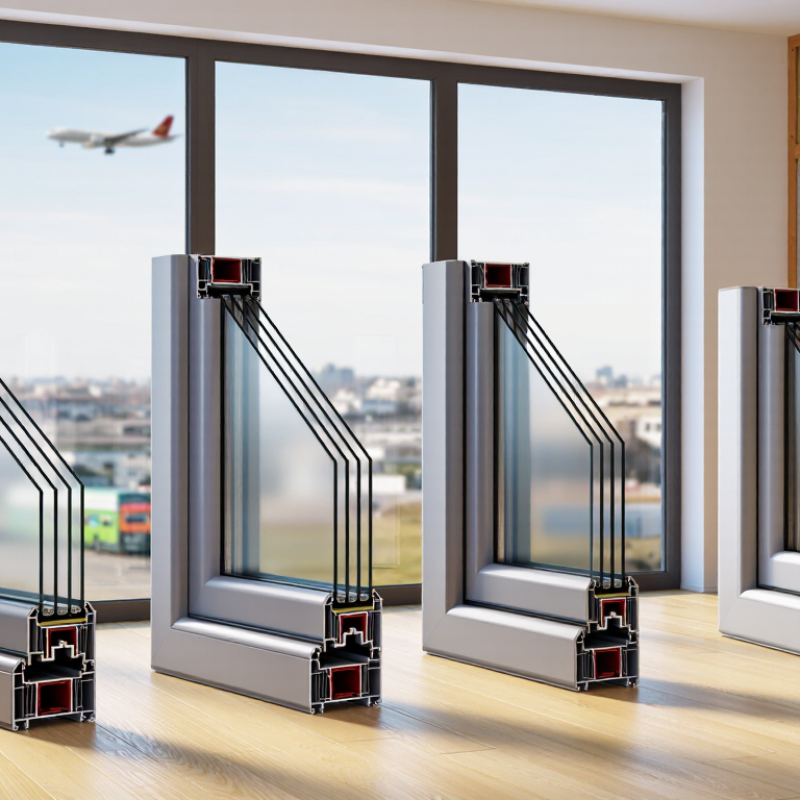
What makes a window soundproof in 2026 is not glass thickness alone. Effective acoustic performance comes from a complete system: laminated glass, separated panes, insulated frames, flexible seals, and accurate installation. During site evaluations, traffic noise often exposes weak points around the frame rather than the center of the glass.

Acoustic laminated glass uses a resilient interlayer to reduce sound vibration. Different pane thicknesses can limit several frequency ranges, including engine rumble and sharp tire noise. A wide air gap inside the insulated glass unit may improve performance, but only when the frame remains rigid and properly sealed. Look for independently tested STC or OITC ratings, not vague claims such as “maximum silence.” Small details matter.

Seals should compress evenly against the sash, with no visible gaps at the corners. Installation foam alone is not enough; the perimeter needs a durable acoustic sealant and careful adjustment. I have seen expensive windows underperform because the surrounding wall had cracks or poorly fitted reveals. That is easy to overlook. Even accurate laboratory ratings cannot reproduce every building, street, or room. A bedroom facing buses needs a different acoustic approach from a study beside steady rainfall. Field testing and honest expectations still matter.

How to Compare Soundproof Window Types and Noise Ratings

2026 Top Soundproof Windows for Global Buyers

How to Compare Soundproof Window Types and Noise Ratings

Comparing soundproof windows begins with the noise source, not the product label. Heavy road traffic, aircraft, voices, and construction noise travel through glass differently. Ask for tested STC and OITC ratings. STC mainly measures speech and indoor sounds, while OITC better reflects traffic and low-frequency outdoor noise. Higher numbers usually indicate stronger reduction, but ratings are not decibel guarantees.

Double glazing can reduce everyday noise when its panes have different thicknesses and a wide sealed gap. Laminated glass often performs better against voices, sirens, and sharp urban sounds. Triple glazing may improve insulation, but it is not automatically quieter. The frame, seals, wall, and ventilation openings can weaken excellent glass. A small installation gap can become a large acoustic problem.

Look for continuous compression seals, rigid frames, and professionally tested assemblies. Secondary glazing can help older buildings by creating another air space, especially near busy streets. Review laboratory reports carefully, including glass thickness, frame type, and test direction. Field results may differ. Real buildings are messier. I have seen highly rated windows underperform because installers left uneven seals or ignored the surrounding wall. That detail is easy to miss.

Measure the room’s existing noise during morning traffic and late evening. Compare the expected sound with the window’s tested rating, not a vague “noise reduction” claim. Local building conditions, climate, and emergency ventilation requirements also deserve review before purchase. A quieter bedroom may require better sealing, not simply thicker glass.

Which Frame, Glass, and Sealing Materials Perform Best

Choosing soundproof windows in 2026 requires more than comparing advertised decibel figures. Frame, glass, and sealing materials must work as one system. A rigid uPVC or thermally broken aluminum frame can reduce movement and maintain stable compression. However, frame quality alone cannot block traffic noise.

Acoustic laminated glass is often the strongest choice for urban bedrooms. Its resilient interlayer helps soften voices, horns, and mid-frequency road noise. Insulating glass units perform better when they use different pane thicknesses, such as 6 mm and 10 mm, instead of identical sheets. Wider air spaces may improve insulation, but they do not automatically guarantee quieter rooms. No window is silent.

Sealing deserves careful inspection. Continuous EPDM or high-grade silicone gaskets should press evenly around every corner. A small gap near the handle can undermine expensive glass. Multi-point locking systems help maintain pressure, especially on tall sashes. I would request laboratory test reports with frequency data, not one impressive decibel number. Installation also matters: expanding foam alone is not a complete acoustic seal. The perimeter needs a durable, flexible acoustic sealant and a correctly sized opening.

Global buyers should match materials to climate, maintenance habits, and local building requirements. Coastal locations may challenge exposed metal components, while hot regions can stress poorly designed seals. One detail is often missed: a quiet window may still transmit sound through vents, walls, or roller shutters. That limitation deserves honest checking before purchase.

How to Choose Soundproof Windows for Different Global Climates

2026 Top Soundproof Windows for Global Buyers

Climate changes the right soundproof window choice. The European Environment Agency reported that over 113 million Europeans faced road traffic noise above 55 dB Lden in 2020. Noise control starts with accurate exposure data, not marketing claims. Ask for tested STC or OITC values under recognized methods, such as ISO 10140 or ASTM E1332. A higher rating helps, but installation gaps can undermine the result.

In cold climates, choose insulated triple glazing, low-emissivity coatings, and warm-edge spacers. These features reduce heat transfer and interior condensation around the frame. In hot climates, compare U-factor with solar heat gain coefficient. A lower U-factor limits conduction, while a suitable SHGC controls intense sunlight. The wrong glass can create a quiet but overheated room.

Humid tropical regions need durable seals, drainage paths, and corrosion-resistant hardware. Wind-driven rain can expose weak frame joints quickly. In dry, dusty areas, compression seals should remain easy to inspect and replace. Laminated glass usually improves airborne noise control, especially near airports and major roads. Yet thick glass alone is not enough. Different pane thicknesses and a wider air gap often perform better across varied frequencies.

Small details matter. Very much.

The EEA report also notes substantial aircraft and rail noise exposure, so buyers should identify the dominant frequency before ordering. This step is often skipped. I would also request field verification after installation, because laboratory ratings cannot fully represent walls, vents, or poor sealing. Real buildings are imperfect. That fact deserves more attention.

2026 Top Soundproof Windows for Global Buyers

How to Choose Soundproof Windows for Different Global Climates

The chart uses representative midpoint OITC values for common window constructions. OITC, measured in decibels, is designed to describe how well a window reduces outdoor-to-indoor sound. Actual results vary with glass thickness, air space, frame design, installation quality, and the surrounding wall.

Cold climates

Choose insulated glazing with a warm-edge spacer, low-emissivity coating, and laminated glass where traffic noise is significant. Check condensation resistance as well as acoustic performance.

Hot-humid climates

Prioritize laminated insulating glass, solar-control low-e coatings, durable seals, and resistance to moisture. Correct installation is essential for both noise control and air leakage.

Hot-dry climates

Use solar-control glazing with laminated panes when possible. Select frames and sealants that tolerate strong ultraviolet exposure and large day-to-night temperature changes.

Marine climates

Look for laminated insulating glass, corrosion-resistant hardware, high-quality gaskets, and tested resistance to wind-driven rain and salt-laden air.

OITC figures shown are representative planning values, not regulatory limits or guaranteed product ratings. Request independently tested OITC data for the complete window assembly before purchase.

What Buyers Should Check Before Installation and Purchase

For 2026, soundproof windows should be judged by measured performance, not marketing language. The World Health Organization’s Environmental Noise Guidelines recommend indoor bedroom noise below 30 dB(A) at night for good sleep. Buyers should compare laboratory ratings, including STC and OITC. ASTM E413 defines STC classification, while OITC better reflects traffic and aircraft noise. Yet laboratory results can differ sharply from real homes.

Glass thickness, air gaps, seals, and frame design all matter. Acoustic laminated glass can reduce speech and road noise, but it cannot fix a leaking frame. Check the complete window assembly, not only the glass. ISO 16283-1 supports field testing after installation, which exposes weak seals and poor wall connections. The U.S. Department of Energy also reports that windows can account for about 25–30% of residential heating and cooling energy use. A quieter window should still limit heat loss.

Tips: Request certified test reports and installation details. Ask whether ratings apply to the full unit. Inspect the wall condition before ordering. Measure traffic noise at different times. Do not assume thicker glass always performs better. In older buildings, ventilation and surrounding masonry may become the real weakness. That part is easy to miss. Budget for professional installation, but question vague “maximum noise reduction” claims. Real-world comfort depends on the entire room, not one impressive laboratory number.

2026 Top Soundproof Windows for Global Buyers - What Buyers Should Check Before Installation and Purchase

Performance ranges are typical market ranges for complete window systems or tested glazing configurations. Actual results depend on frame design, glass thickness, air gaps, window size, installation quality, and laboratory test conditions.
Window Configuration Typical Acoustic Rating Typical Thermal Performance Best Noise-Reduction Use Main Advantages Important Limitations Buyer Suitability
Double glazing with one laminated pane STC approximately 35–42
OITC approximately 28–36
U-factor approximately 0.25–0.35 Btu/h·ft²·°F
Approximately 1.4–2.0 W/m²·K
Urban traffic, conversation, neighborhood activity, and moderate construction noise
  • Good balance between cost, weight, and sound control
  • Available in many frame systems
  • Laminated glass also improves safety and UV protection
May not sufficiently reduce low-frequency aircraft, rail, or heavy-truck noise without a wider air space and stronger frame system. Suitable for most residential replacement projects
Asymmetric insulated glass unit with laminated glass STC approximately 38–45
OITC approximately 31–39
U-factor approximately 0.20–0.30 Btu/h·ft²·°F
Approximately 1.1–1.7 W/m²·K
Busy roads, city centers, commercial streets, and mixed-frequency outdoor noise
  • Different glass thicknesses reduce resonance overlap
  • Better acoustic performance than two equal glass panes
  • Can provide strong thermal and solar-control performance
Heavier and usually more expensive; the frame, hardware, and edge seals must be designed for the increased weight. Strong all-round option for global residential and light-commercial buyers
Triple glazing with one or two laminated panes STC approximately 40–46
OITC approximately 32–40
U-factor approximately 0.15–0.25 Btu/h·ft²·°F
Approximately 0.85–1.40 W/m²·K
Cold climates, high-traffic locations, and projects requiring both energy efficiency and noise reduction
  • Very good thermal insulation
  • Two air spaces can improve overall performance
  • Good interior surface temperature in cold weather
More frame depth, weight, cost, and embodied material; triple glazing is not automatically quieter than a well-designed asymmetric double-glazed unit. Best for cold or mixed climates when structure and budget allow
Secondary interior glazing STC approximately 40–54
Performance depends strongly on cavity width and airtightness
Thermal performance varies widely with the original window, secondary frame, and cavity Aircraft, rail, road, and other high-noise locations where the existing window can remain in place
  • Large separation between the existing and secondary panes can improve low-frequency control
  • Can upgrade heritage or restricted façades without removing the original window
  • Often effective when the original frame is structurally sound
Reduces opening area, requires careful ventilation and condensation management, and may affect cleaning and emergency egress. Excellent retrofit choice for heritage buildings and severe noise exposure
Single laminated glazing STC approximately 32–38
OITC approximately 25–32
U-factor commonly approximately 0.45–0.60 Btu/h·ft²·°F
Approximately 2.6–3.4 W/m²·K
Moderate noise reduction where double glazing is not possible
  • Lower thickness and weight than insulated units
  • Can improve safety and reduce some speech-frequency noise
  • Useful for selected interior partitions and mild climates
Weak thermal insulation and limited low-frequency noise control; not normally the first choice for external façades in extreme climates. Budget or space-constrained option only
Acoustic window wall or large fixed glazing system STC approximately 38–50 when laboratory tested as a complete system U-factor commonly approximately 0.20–0.35 Btu/h·ft²·°F
Approximately 1.1–2.0 W/m²·K
Large openings facing highways, airports, rail corridors, or entertainment districts
  • Fixed sections can achieve better airtightness than operable sections
  • Large laminated units can combine daylight with acoustic control
  • Suitable for façade design and panoramic openings
Large glass sizes increase structural, transport, handling, and replacement requirements; mullions and joints can become acoustic weak points. Suitable for premium residential and commercial façades

Key Technical Checks Before Purchase

Check Item What Buyers Should Request Why It Matters Practical Acceptance Point
STC rating A laboratory STC report for the complete window, including frame, seals, hardware, and glazing. STC mainly represents speech and mid-to-high-frequency sound. Glass-only data may overstate real installed performance. Compare complete-system results rather than comparing glass thickness alone.
OITC rating An OITC value where traffic, aircraft, rail, or other low-frequency outdoor noise is important. OITC gives greater consideration to lower-frequency exterior noise than STC. Use OITC for exterior transportation noise and STC for speech-oriented noise comparisons.
Glass composition Exact pane thicknesses, laminate interlayer type, air-space widths, and whether the unit is double or triple glazed. Different thicknesses and laminated interlayers can reduce resonance and improve acoustic performance. Do not accept descriptions such as “acoustic glass” without a tested configuration.
Air-space width Clear cavity dimensions between panes and the spacer specification. A wider cavity generally improves sound insulation within practical limits, while narrow cavities can reduce performance. Verify the cavity on the quotation and technical drawing, not only in marketing images.
Frame and opening type Frame material, gasket design, lock points, compression seals, and whether the unit is fixed, casement, tilt-turn, sliding, or hung. Air leakage through moving joints is a frequent acoustic weakness. Fixed and compression-sealed windows usually perform better than loosely sealed sliding units. Choose the lowest practical air-leakage class for the local climate and noise exposure.
Air leakage Test results under a recognized regional standard, such as ASTM, EN, ISO, or an equivalent national standard. Even small gaps can transmit substantial sound and reduce the benefit of high-performance glazing. Require perimeter seals, correctly sized hardware, and a documented installation sealing method.
Thermal U-factor U-factor in the unit system used by the project, preferably for the complete window rather than the center of glass only. Lower U-factor means less heat transfer, but frame and edge performance also affect the whole-window result. Compare whole-window values and confirm whether the figure is in Btu/h·ft²·°F or W/m²·K.
Solar heat gain SHGC or equivalent solar-factor value, together with visible transmittance. Low SHGC can reduce cooling loads in hot climates, while higher values may be useful in cold climates with beneficial winter sun. Select the value according to orientation, shading, climate zone, and local energy requirements.
Condensation resistance Condensation-resistance data where available, plus spacer, edge-seal, and frame details. Warm indoor air can condense on cold frames or glass edges, especially in cold climates or humid rooms. Confirm indoor humidity targets, ventilation, and thermal-bridge control before installation.
Safety and impact requirements Laminated or tempered safety-glass classification and applicable impact or human-safety test results. Glass selection must address falls, doors, low-level glazing, storms, security, and local building regulations. Check local code requirements before finalizing pane type and thickness.
Installation tolerance Approved rough-opening dimensions, packer locations, fixing points, sealant compatibility, and movement allowances. A high-rated window can underperform if it is distorted, poorly packed, or installed with discontinuous seals. Use a trained installer and inspect the perimeter seal continuously around the opening.
Acoustic weak points Details for vents, trickle ventilators, roller shutters, letter plates, pet doors, mullions, and adjacent wall construction. Sound can bypass the glass through vents, gaps, lightweight walls, roofs, or connected construction. Assess the complete façade, not the window in isolation.
Testing and certification Current laboratory reports identifying the tested size, glazing, frame, seals, operating mode, and test standard. Ratings are configuration-specific and may not apply to a different size, opening style, or glazing combination. Ensure the proposed product matches the tested configuration as closely as possible.
Warranty and maintenance Coverage for insulated-glass seal failure, hardware, finishes, frame movement, and installation workmanship. Acoustic and thermal performance can decline if gaskets, hardware, or sealed units fail. Obtain written warranty terms, maintenance intervals, and replacement procedures before ordering.

Global Buyer Selection Guide

Project Condition Recommended Starting Specification Additional Considerations
Moderate city noise Asymmetric double glazing with at least one laminated pane; compression-sealed opening frame. Prioritize airtight installation and check OITC when road traffic is the main concern.
Highway or heavy-truck exposure Asymmetric laminated glazing or secondary glazing with a wide, airtight cavity. Low-frequency performance, wall construction, vents, and façade joints require special attention.
Airport or railway exposure Complete-system testing with a strong OITC result; consider secondary glazing or a high-performance laminated unit. Ask for low-frequency test information and avoid relying on STC alone.
Cold climate Triple glazing or high-performance double glazing with low U-factor, warm-edge spacer, and insulated frame. Check condensation resistance, interior humidity, solar gain, and local energy-code requirements.
Hot and sunny climate Laminated insulated glazing with a climate-appropriate SHGC and effective external shading. Low solar gain can reduce cooling demand, but excessive tinting may reduce daylight and passive solar benefits.
Tropical or humid climate Airtight, corrosion-resistant frame with durable gaskets, suitable drainage, and laminated insulated glass where required. Control indoor humidity and verify compatibility of sealants, coatings, hardware, and coastal exposure requirements.
Heritage or restricted façade Secondary interior glazing or a slim-profile laminated replacement approved for the building. Confirm planning restrictions, ventilation, moisture control, sightlines, and emergency escape requirements.
Large panoramic opening Fixed or compression-sealed acoustic glazing system with structural and acoustic testing at the proposed size. Check mullions, transoms, glass weight, transport access, deflection limits, and replacement logistics.