China’s home insulation solutions are attracting global buyers seeking lower energy use, steadier indoor temperatures, and dependable project performance. The opportunity is substantial. The International Energy Agency reports that buildings consume about 30% of global final energy and produce roughly 26% of energy-related emissions. The 2023 Global Status Report for Buildings and Construction gives an even broader warning: buildings and construction used about 32% of global energy and generated approximately 34% of global carbon dioxide emissions in 2022.
China offers a wide manufacturing base, including mineral wool, glass wool, expanded polystyrene, extruded polystyrene, polyurethane, and vacuum insulation panels. However, product choice should not rely on price alone. Buyers need thermal conductivity data, fire-performance classifications, moisture resistance, compressive strength, declared thickness, and third-party test records. A 50-millimeter panel may perform very differently when installation gaps, humidity, or thermal bridging are ignored. Small details matter.
Building scientist Joseph Lstiburek is widely associated with a practical principle: “The perfect wall has to control rain, air, vapor, and heat.” This idea is useful when evaluating Chinese suppliers for cold roofs, external walls, floors, and retrofit projects. A reliable specification should match the insulation system with local climate, wall structure, workmanship, and applicable building codes. Factory experience helps, but it does not replace independent verification. That is the uncomfortable part. Some product pages look convincing while offering limited evidence. Global buyers should inspect samples, audit production controls, confirm certification validity, and test performance before committing to large orders. Good home insulation solutions are not simply materials in a carton; they are tested systems designed for real buildings.
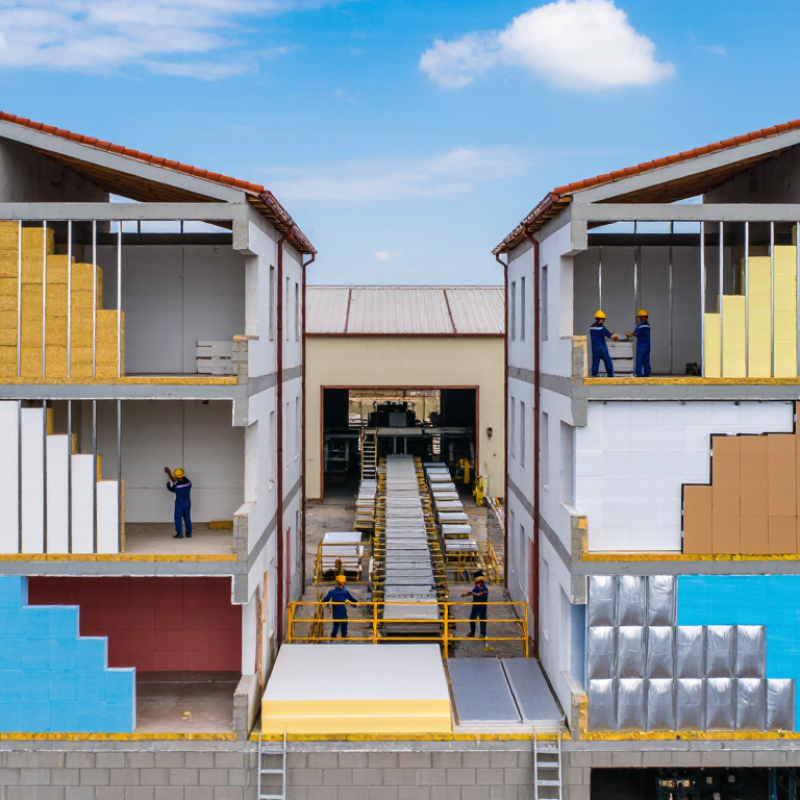
Chinese manufacturers offer several home insulation types for different climates, budgets, and construction systems. Expanded polystyrene (EPS) is lightweight and cost-effective for external wall systems. Extruded polystyrene (XPS) has lower water absorption, making it useful below ground and under floors. Mineral wool provides thermal resistance, sound control, and strong fire performance. Polyurethane and polyisocyanurate panels deliver high insulation value where wall space is limited.
The IEA’s Energy Efficiency 2023 report states that buildings consume about 30% of global final energy. They also create roughly 26% of energy-related emissions. These figures make material selection more than a purchasing decision. Chinese factories commonly provide cut-to-size panels, laminated boards, and customized density options. Buyers should check declared thermal conductivity, water absorption, dimensional stability, and fire-test documentation. Numbers can change after installation.
For colder regions, thicker EPS or mineral wool may provide practical value. In humid areas, XPS or closed-cell foam can reduce moisture risks. Aerogel blankets are another option, but their higher cost limits wider residential use. Product certificates, batch testing, and installation guidance matter as much as factory capacity. I have seen specifications look excellent on paper, yet poor sealing around windows weakened the result. A small thermal bridge can waste a careful material choice. Independent testing and local building-code review remain essential.
For global buyers, China offers a wide range of home insulation products, but product selection should begin with performance evidence. In factory audits, I check thermal conductivity at a declared mean temperature. Lower lambda values usually indicate better insulation, but test conditions matter. Ask for the full report, not only a sales-sheet figure.
R-value should match the installed thickness and climate zone. A product rated at 50 millimeters may perform differently after compression or moisture exposure. Water absorption is important for exterior walls, roofs, and below-grade areas. I also review dimensional stability after heating and cooling cycles. Small gaps can create visible cold bridges. Fire performance requires special attention. Confirm the tested classification under relevant EN, ASTM, or ISO methods, then compare it with local building requirements. Do not rely on a translated certificate alone.
Acoustic performance can matter in apartments and roadside homes. Look for measured sound reduction data, not broad claims such as “quiet material.” Check density, facing quality, edge condition, and packaging strength during shipment. I once found good laboratory results paired with weak cartons; several boards arrived damaged. That lesson still matters. Request production samples, batch traceability, installation guidance, and independent testing where practical. Some evaluations remain incomplete because real walls contain joints, fasteners, and uneven surfaces. A careful buyer should question those gaps before approving a large order.
The chart compares representative thermal conductivity values for widely used residential insulation materials. Lower thermal conductivity generally indicates better heat-flow resistance and higher insulation efficiency. Values are typical midpoints within commonly published product ranges and may vary with density, moisture content, temperature, and test method.
Insulation selection should begin with climate, not price. In cold regions, mineral wool, expanded polystyrene, and rigid polyisocyanurate boards can reduce heat loss through walls and roofs. Choose the required thermal resistance according to local building rules. A thicker layer is not always better if moisture becomes trapped.
Hot, humid zones need heat control and careful vapor management. Closed-cell boards can limit water absorption, while reflective layers may help under a sun-heated roof. Leave space for ventilation where the roof design requires it. In dry, hot climates, dense insulation and light-colored exterior finishes can reduce indoor temperature swings.
Coastal homes face salt air, wind-driven rain, and corrosion risks around fixings. Select water-resistant materials and check how joints are sealed. In mixed climates, seasonal movement matters. Flexible mineral wool may suit framed walls, while rigid boards can work well on continuous exterior insulation systems.
Experienced buyers should request test reports, declared thermal conductivity, fire performance, water absorption data, and dimensional stability. Ask for samples and inspect cut edges, density, and surface consistency. Local installers should confirm compatibility with membranes, plaster, and fasteners.
I would not rely on a catalog alone. Real walls often contain bridges, gaps, and imperfect workmanship. A small installation mistake can weaken an expensive system. Condensation calculations and site-specific advice are worth the extra effort, especially when importing materials across different building standards.
China Top Home Insulation Solutions for Global Buyers?
China has built a broad manufacturing base for home insulation materials, including mineral wool, glass wool, EPS, XPS, and reflective systems. Many factories operate automated cutting, forming, laminating, and packaging lines. Buyers can request production samples before approving large orders. This simple step often reveals uneven density, weak facings, or inaccurate dimensions.
Certification should match the destination market and the product’s actual use. Reliable suppliers can provide laboratory reports, fire-performance data, thermal conductivity results, and safety documentation. Buyers should check test dates, sample descriptions, and issuing laboratories carefully. A certificate alone proves little when it covers a different thickness or formulation. Factory audits can also review raw-material storage, batch records, worker training, and quality-control points. Details matter.
Export capability extends beyond manufacturing. Experienced teams prepare commercial invoices, packing lists, product specifications, and shipping documents with consistent information. Moisture-resistant wrapping helps protect insulation during sea transport, especially in humid seasons. Pallets should remain stable during loading and unloading. No supplier is flawless. Even a well-managed factory may face material variation, port delays, or communication gaps. Clear tolerances, inspection schedules, and written packaging requirements reduce these risks. Global buyers should compare delivered performance, compliance evidence, and after-sales responsiveness rather than choosing only by price.
| Insulation Solution | Common Product Forms | Typical Declared Thermal Conductivity | Typical Applications | Fire-Performance Considerations | Relevant International Standards | Quality and Certification Documents Buyers Commonly Request | Export and Packaging Considerations |
|---|---|---|---|---|---|---|---|
| Expanded Polystyrene (EPS) | Boards, molded panels, insulated wall systems, floor insulation | Approximately 0.032–0.040 W/m·K, depending on density and grade | External wall insulation, cavity walls, roofs, floors, and foundation insulation | Combustible; fire performance depends on formulation, density, facing, system design, and installation details | EN 13163 ASTM C578 | Product datasheet, technical data sheet, batch test report, dimensional tolerance report, density record, and applicable conformity documentation | Lightweight and volume-sensitive; compression strength, edge protection, moisture control, and container loading efficiency should be agreed before shipment |
| Extruded Polystyrene (XPS) | Rigid boards with smooth or textured surfaces | Approximately 0.029–0.036 W/m·K, depending on thickness and product grade | Basements, inverted roofs, under-slab applications, foundations, and areas requiring higher moisture resistance | Combustible; must be protected and installed as part of a tested building assembly where required by local regulations | EN 13164 ASTM C578 | Water absorption test, compressive strength report, dimensional stability data, thermal resistance declaration, and conformity assessment documents | Boards should be protected from prolonged ultraviolet exposure, excessive heat, crushing, and water contamination during storage and transport |
| Stone Wool and Glass Wool | Batts, rolls, rigid slabs, pipe sections, and acoustic panels | Approximately 0.032–0.040 W/m·K, depending on density and product type | Walls, roofs, ceilings, partitions, HVAC systems, acoustic treatment, and fire-resistant assemblies | Many mineral-wool products can achieve high reaction-to-fire classifications, but the final rating depends on binders, facings, thickness, and system construction | EN 13162 ASTM C612 ASTM C665 | Reaction-to-fire report, thermal conductivity report, density and thickness records, water-repellent treatment data where applicable, and formaldehyde or emissions information where requested | Products can be bulky; moisture-resistant wrapping, pallet configuration, compression packaging, and container utilization are important cost factors |
| Polyurethane and Polyisocyanurate (PUR/PIR) | Rigid boards, composite panels, insulated roofing panels, and pipe insulation | Approximately 0.022–0.028 W/m·K, subject to aging, facing, thickness, and formulation | High-performance roofs, walls, cold storage, industrial buildings, and areas with limited insulation space | Combustible core; fire behavior varies significantly according to chemistry, facings, joints, thickness, and complete assembly testing | EN 13165 ASTM C1289 ISO 4898 | Thermal aging data, dimensional stability, compressive strength, closed-cell content where relevant, fire test reports, and facing adhesion records | Requires protection from impact, moisture, and excessive heat; buyers should confirm blowing-agent requirements and applicable environmental regulations |
| Phenolic Foam | Rigid boards, insulated duct panels, and composite wall or roof panels | Approximately 0.020–0.025 W/m·K, depending on product construction and aging method | Thin-profile wall, roof, floor, and HVAC duct applications requiring high thermal resistance per unit thickness | Fire performance varies by facing, thickness, joints, and test method; smoke and toxicity requirements should be checked for the destination market | EN 13166 ASTM C1126 | Fire classification report, thermal conductivity at stated mean temperature, dimensional stability, water absorption, and surface-finish documentation | Edges and facings should be protected during handling; confirm compatibility with adhesives, membranes, sealants, and mechanical fixings |
| Cellulose Fibre Insulation | Loose-fill, blown-in, and dense-packed insulation | Approximately 0.038–0.042 W/m·K, depending on density and installation method | Attics, timber-frame walls, retrofit cavities, and irregular building envelopes | Usually treated with fire-retardant additives; performance depends on treatment durability, installed density, moisture level, and enclosure design | EN 15101-1 ASTM C739 | Installed-density guidance, settling data, moisture content, fire-treatment information, recycled-content statement, and installation equipment requirements | Typically shipped in compressed bags; packaging integrity, humidity control, storage conditions, and final installed volume must be specified |
| Aerogel Blanket | Flexible blankets, removable insulation covers, and specialty thermal barriers | Often approximately 0.013–0.020 W/m·K at specified mean temperatures; values vary with test method and temperature | Space-constrained retrofit areas, thermal bridges, high-temperature pipework, façades, and specialty building details | Fire behavior depends on the aerogel matrix, reinforcement, facing, and service temperature; certification must be reviewed for the exact product | ASTM C1728 EN 14303 | Thermal conductivity curve, maximum service temperature, flexibility and thickness data, fire test report, dust-control information, and installation instructions | Higher unit cost and careful handling requirements; roll dimensions, dust protection, cutting method, and minimum order quantity should be confirmed |
China Top Home Insulation Solutions for Global Buyers?
Sourcing home insulation from China requires more than comparing price per square meter. The UNEP and GlobalABC 2023 Global Status Report found that buildings used 34% of global energy in 2022. They also produced 37% of energy-related and process carbon emissions. Insulation can reduce heating and cooling demand, but only when its thermal performance matches the local climate. Ask suppliers for declared thermal conductivity, density, moisture resistance, and fire-test documentation. Request reports from accredited laboratories, not only factory brochures.
For installation, inspect the whole building envelope. Wall, roof, floor, windows, and service penetrations must work together. A small gap around a pipe can undermine a large insulated wall. Vapor control also depends on climate, indoor humidity, and wall design. There is no universal “best” material. That assumption often causes expensive repairs. Local building codes must guide thickness, fire classification, and ventilation details.
Tips: Compare thermal resistance, not product thickness alone. Confirm testing standards before ordering samples. Check packaging after simulated sea transport. On site, measure joints and record moisture conditions. Consider a small pilot area first. It may feel slower, but it exposes installation problems early. Recheck the design with a qualified local professional; imported specifications may not fit local construction habits.