
China Best Energy Efficient Doors Manufacturers
Choosing China’s best energy efficient doors manufacturers requires more than comparing prices or polished product photos. It requires practical evidence, technical understanding, and dependable communication. A suitable manufacturer should demonstrate experience with residential, commercial, and industrial projects. Factory visits, sample inspections, and production records can reveal details that brochures often miss.
Look for doors with thermally broken frames, insulated cores, low-emissivity glass, and continuous weather seals. These components help reduce heat transfer around the opening. However, a low U-value alone does not guarantee real performance. Installation quality matters just as much. A small gap beneath a door can weaken an otherwise excellent system. Reliable manufacturers should provide laboratory data, test methods, and product specifications that match regional building requirements.
Communication is another practical measure of professionalism. Clear drawings, verified dimensions, realistic lead times, and responsive after-sales support reduce costly mistakes. Experienced suppliers may also explain differences between aluminum, steel, fiberglass, and composite doors. They should not promise identical results for every climate or building type. No factory is perfect. Even strong manufacturers may have limited customization, seasonal delays, or inconsistent finishing between batches. These weaknesses deserve honest discussion.
This guide examines China’s leading manufacturers through product quality, thermal performance, certifications, customization, production capability, and service reliability. It focuses on evidence rather than impressive claims. Buyers can use these criteria to compare suppliers more carefully, request meaningful samples, and choose energy efficient doors that perform reliably in actual buildings.
Types of Energy-Efficient Doors Manufactured in China
China Best Energy Efficient Doors Manufacturers
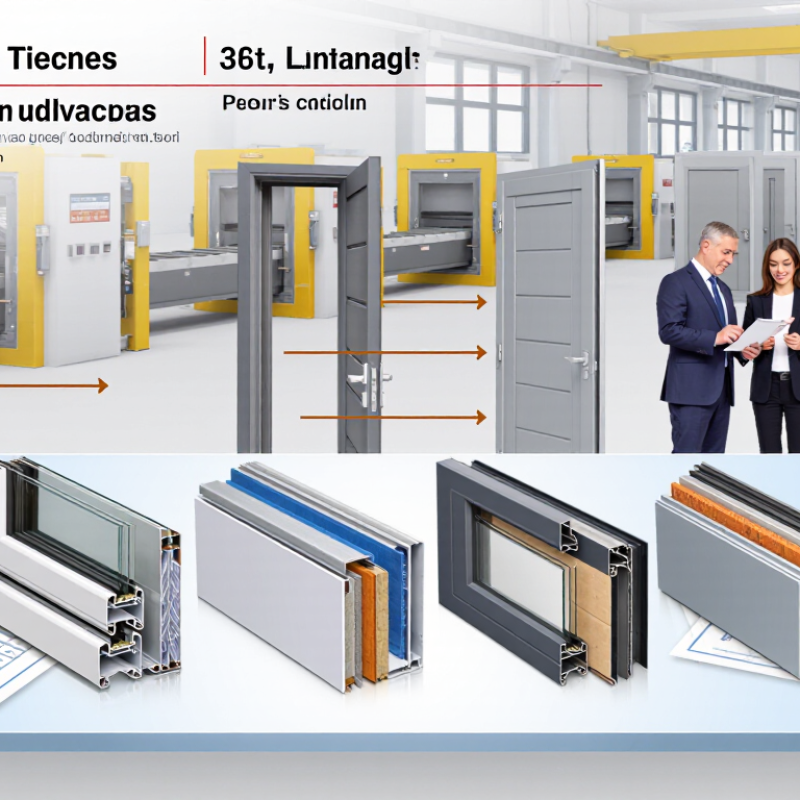
China manufactures several energy-efficient door types for homes, offices, hotels, and industrial buildings. Thermally broken aluminum doors use polyamide barriers to reduce conductive heat transfer. Insulated steel doors often contain polyurethane or mineral wool cores. Fiberglass and uPVC doors resist moisture and maintain stable insulation in changing climates. Engineered timber doors can also perform well when sealed correctly. Many systems combine low-emissivity glass, magnetic gaskets, and multi-point locking hardware.
The International Energy Agency reports that buildings consume about 30% of global final energy and produce around 26% of energy-related emissions. Door selection matters, although its impact is often overstated. A lower U-value does not guarantee better performance if installation leaves gaps. Chinese manufacturers commonly provide thermal calculations and testing under standards such as GB/T 8484 and GB/T 7106. Buyers should request complete test reports, not only catalogue figures. Results can vary with glass thickness, frame design, climate, and installation quality.
Tips: Compare U-value, air leakage, solar heat gain, and seal durability together. Check whether factory tests match the project’s climate zone. Ask for corner-joint samples and inspect gasket compression by hand. This simple step is useful. However, performance claims still need independent verification. A beautiful door may perform poorly after repeated opening, careless fitting, or uneven walls. That practical weakness deserves more attention during procurement.
| Door Type | Common Construction | Typical Thermal Insulation | Typical U-Value Range* | Energy-Efficiency Features | Suitable Applications | Relevant Test or Design References |
|---|---|---|---|---|---|---|
| Insulated Steel Exterior Door | Galvanized or coated steel skins with a polyurethane or mineral-wool insulated core | Moderate to high, depending on core thickness and edge construction | Approximately 1.0–2.0 W/m²·K | Low-conductivity insulated core, magnetic weatherstripping, adjustable threshold, insulated frame option | Residential entrances, apartments, commercial service entrances, utility buildings | Air leakage testing may reference ASTM E283 or EN 1026; thermal calculation may reference ISO 10077-1 |
| Thermally Broken Aluminum Door | Aluminum profiles separated by a polyamide thermal barrier, often combined with insulated glazing | Moderate to high; the thermal break reduces direct heat transfer through the frame | Approximately 1.2–2.2 W/m²·K | Polyamide thermal break, multi-point locking, compression seals, low-emissivity glazing options | Commercial buildings, offices, hotels, balconies, retail entrances | EN 14024 is commonly associated with thermal barrier components; EN 14351-1 covers exterior pedestrian doorsets in applicable markets |
| uPVC Door | Multi-chamber unplasticized PVC profiles with steel or composite reinforcement and insulated panels or glazing | High because PVC has relatively low thermal conductivity and can incorporate multiple chambers | Approximately 0.8–1.6 W/m²·K | Multi-chamber frame, continuous gaskets, insulated door panel, warm-edge spacer, low-e double or triple glazing | Residential entrances, balconies, patios, low-rise housing | EN 14351-1 and EN 12207 are commonly used references for performance classification in European projects |
| Fiberglass Composite Door | Glass-fiber-reinforced polymer skins over a polyurethane or other insulating foam core | High, with relatively low thermal bridging through the door slab | Approximately 0.8–1.5 W/m²·K | Insulated slab, moisture-resistant skins, compression seals, insulated frame and threshold options | High-performance residential entrances, coastal or humid environments, replacement projects | Performance is typically evaluated through whole-door thermal and air-leakage testing; project specifications may reference NFRC or ASTM procedures |
| Insulated Wood or Wood-Composite Door | Engineered timber stiles and rails with insulated cores, veneers, or weather-resistant exterior layers | Moderate to high; performance depends strongly on moisture control, core design, and frame details | Approximately 1.0–1.8 W/m²·K | Insulated core, thermally improved threshold, multi-point locking, durable perimeter seals, protected finishes | Premium residential entrances, villas, traditional-style buildings | Thermal performance may be calculated using ISO 10077-1 or assessed through applicable whole-door testing methods |
| Insulated Glass Entrance Door | Aluminum, steel, uPVC, or composite frame with double or triple insulating glass units | Varies from moderate to very high according to glazing, spacer, frame, and glass-to-frame ratio | Approximately 0.9–2.0 W/m²·K | Low-e coating, argon-filled cavity, warm-edge spacer, thermally broken frame, low air-infiltration seals | Office entrances, curtain-wall interfaces, retail buildings, modern homes | Glazing design may reference EN 673 or ISO 10292; whole doorsets may be assessed under EN 14351-1 or NFRC procedures |
| High-Speed Insulated Industrial Door | Insulated sectional panels or flexible insulated curtains with controlled opening and closing cycles | Moderate to high when panel joints, side guides, and bottom seals are properly designed | Approximately 0.7–1.8 W/m²·K | Insulated panels, tight perimeter seals, rapid opening speed, automatic closing, wind-load resistance options | Warehouses, cold-chain facilities, factories, logistics centers | Industrial doors may be evaluated under EN 13241; thermal and air-permeability requirements depend on the door category and project specification |
| Cold-Room or Refrigeration Door | Thick insulated sandwich panels with polyurethane or equivalent closed-cell insulation and hygienic facing materials | Very high for temperature-controlled environments | Approximately 0.3–0.8 W/m²·K | Thick insulated core, heated or low-temperature gaskets, vapor-resistant joints, self-closing hardware, thermal-break frame | Cold storage, food processing, pharmaceutical facilities, refrigerated rooms | Required performance should be verified against the specified operating temperature, vapor-control design, air leakage, and hygiene requirements |
| Fire-Rated Insulated Metal Door | Steel leaves with mineral-wool or other fire-resistant core, reinforced frame, and tested fire-rated hardware | Moderate; fire resistance and smoke control take priority over maximum thermal performance | Approximately 1.5–3.0 W/m²·K | Fire-resistant core, intumescent seals, self-closing device, smoke-control seals, insulated frame options | Stairwells, plant rooms, commercial buildings, industrial facilities | Fire rating must be based on a tested and certified doorset; applicable references may include EN 1634-1 or UL 10C, depending on the market |
| Acoustic and Thermal Composite Door | Multi-layer slab combining dense acoustic layers, resilient seals, and a thermal insulation core | Moderate to high, depending on the balance between acoustic mass and insulation thickness | Approximately 1.0–2.0 W/m²·K | Perimeter compression seals, drop seal, insulated core, multi-layer construction, optional acoustic glazing | Hotels, apartments, recording spaces, meeting rooms, buildings near traffic corridors | Acoustic performance is commonly rated under ISO 10140 or ASTM E90; thermal and air-leakage performance should be specified separately |
Related Posts
-
Why Choose Energy Efficient Doors for Your Home?
-

Why Choose Noise Reduction Windows for Global Projects?
-

Why Are Window Insulation Systems Essential for Energy Efficiency?
-
10 Essential Tips for Choosing Window Installation Services?
-
What is the Advantage of Tilt and Turn Windows for Your Home?
-

Top 10 Benefits of Soundproof Windows for Your Home?