How to Choose the Best Grass Wall Panel in 2026?
Choosing the right Grass Wall Panel in 2026 requires more than comparing photographs and prices. Green texture can transform a hotel lobby, balcony, showroom, or restaurant wall within hours. Yet attractive foliage does not prove durability, safety, or installation quality. Looks can mislead.
Market evidence supports careful evaluation. Grand View Research identifies landscaping as a significant application in the expanding artificial turf market, driven by water-saving and low-maintenance demand. Mordor Intelligence also reports continued growth in artificial grass, supported by commercial landscaping and urban beautification projects. These trends explain the wider panel selection available today. They do not make every product suitable for every wall.
A reliable choice should match the location, climate, and maintenance plan. Examine UV resistance, backing strength, drainage behavior, foliage density, odor, and color stability. For indoor commercial projects, request tested fire-performance documentation, such as ASTM E84 or an applicable EN classification. Confirm whether those results apply to the complete panel, not only one material layer. That distinction matters. The product should also include clear installation guidance, warranty terms, batch information, and supplier contact details. Experienced installers often inspect wall moisture before fixing panels, because trapped dampness can damage finishes and create hidden problems. I would not trust a warranty without reading its exclusions. A cheaper panel may become expensive after fading, shedding, or repeated replacement. This guide compares practical specifications, verified claims, and real installation conditions, helping buyers choose with confidence while recognizing one uncomfortable truth: no panel performs perfectly everywhere.
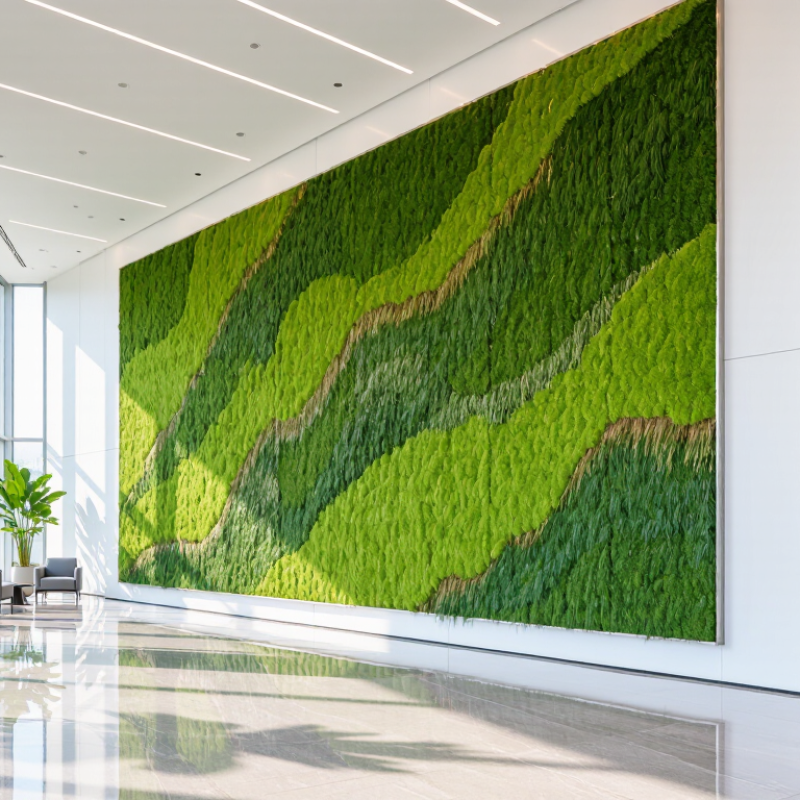
Understanding Grass Wall Panel Types and Materials
How to Choose the Best Grass Wall Panel in 2026?
Grass wall panels are no longer one material choice. Artificial panels usually use polyethylene or polypropylene blades, backed by PVC, polyester, or mesh. Polyethylene feels softer and more natural, while polypropylene often offers stronger shape retention. A 2024 Grand View Research analysis estimated the global artificial plants market at about USD 1.8 billion in 2023, with steady growth expected through 2030. That growth reflects wider use in offices, hospitality spaces, and residential interiors.
Preserved moss panels create a softer, textured surface without irrigation. They suit quiet indoor areas, but high humidity can shorten their service life. Living systems look more authentic, yet they require lighting, drainage, and regular maintenance.
Artificial grass is simpler, but check UV resistance, backing strength, and cleaning access. Ask for ASTM E84 or equivalent fire-test documentation where local codes require it. Do not rely on appearance alone.
Material labels can mislead. A dense panel may still shed fibers at the edges. I would inspect one sample under bright light, bend its backing, and check for odor before ordering. The International WELL Building Institute emphasizes indoor environmental quality, so low-emission materials deserve attention. This is easy to overlook.
Also, color variation between batches can be surprisingly visible. A sample may not represent the final wall perfectly. That uncertainty should influence the quantity, layout, and replacement plan.
Assessing Panel Quality, Durability, and Realistic Appearance
Choosing a grass wall panel in 2026 requires more than judging its color from a product photo. Quality appears in the small details. I run my fingers through the blades and check whether they spring back after bending. Dense, varied fibers usually look more natural than evenly cut, shiny strands. A realistic panel also mixes subtle green tones, uneven heights, and visible shadow depth. Perfect uniformity often looks artificial.
Durability starts with the backing. It should feel firm, resist tearing, and remain flat after handling. For outdoor use, ask for tested resistance against ultraviolet exposure, moisture, and temperature changes. Secure stitching or welded connections matter around corners. I once chose a lightweight panel because installation seemed easier. It sagged after heavy rain. That mistake changed how I inspect weight and support structure.
Look closely from several distances. A convincing wall should still appear textured from three meters away, not like a flat printed sheet. Check the edges, since exposed seams can quickly ruin an otherwise attractive installation. Odor can also reveal poor material quality, especially in enclosed spaces. Request clear care instructions and test documentation from the seller. Do not rely only on vague claims. Even a premium-looking panel may fade sooner than expected under strong sunlight. I still allow for that possibility and choose replaceable sections where practical. Safety needs attention too, including suitable fire-performance information for the installation location.
How to Choose the Best Grass Wall Panel in 2026? - Assessing Panel Quality, Durability, and Realistic Appearance
| Panel Category | Typical Material | Blade Height | Panel Size | UV Resistance | Expected Outdoor Life | Rain Drainage | Realistic Appearance
(1–10) | Recommended Use |
| Economy Short-Grass Panel | Polypropylene foliage on a plastic backing | 25–35 mm | 40 × 60 cm | Basic | 1–2 years outdoors | Open-grid backing | 5.5 | Temporary displays and sheltered balconies |
| Standard Mixed-Grass Panel | Polyethylene and polypropylene grass fibers | 35–45 mm | 50 × 50 cm | Moderate | 2–4 years outdoors | Perforated grid | 7.0 | Interior feature walls and covered patios |
| Premium Multi-Tone Panel | UV-stabilized polyethylene with varied blade textures | 40–55 mm | 50 × 50 cm | Good | 4–6 years outdoors | Reinforced open grid | 8.5 | Visible exterior walls, entrances, and hospitality areas |
| High-Density Vertical-Grass Panel | Dense polyethylene fibers with flexible stems | 45–65 mm | 60 × 40 cm | Good to high | 5–8 years outdoors | Deep drainage grid | 9.0 | Premium landscaping, retail façades, and photo areas |
| Interior Decorative Moss-Grass Panel | Polyester or polyethylene foliage on a lightweight backing | 20–45 mm | 50 × 50 cm | Not intended for direct sun | 5–10 years indoors | Limited; keep dry | 8.0 | Offices, bedrooms, restaurants, and retail interiors |
Selection note: Outdoor service life depends on sunlight intensity, climate, installation quality, cleaning, and the manufacturer’s UV test data. Before purchase, check fiber density, backing strength, color variation, drainage openings, flame-resistance documentation where required, and the product’s warranty conditions.
Matching Grass Wall Panels to Indoor and Outdoor Spaces
Choosing the Best Grass Wall Panel for Indoor and Outdoor Spaces
The best grass wall panel depends on the space, not only its visual appeal. For living rooms, offices, and reception areas, choose dense, soft-textured panels with a stable backing. Fine blades create a calmer appearance and collect less visible dust. Low-odor materials are also preferable indoors, especially in bedrooms or poorly ventilated rooms. Measure the wall carefully, then test a sample beside your furniture and lighting. Artificial greenery can look warmer under yellow bulbs and harsher under cool LEDs.
Outdoor walls require different evidence. Look for UV-resistant fibers, water-tolerant backing, and secure fixing systems. A balcony facing west may receive strong afternoon sunlight, while a shaded garden wall may stay damp after rain. Leave suitable drainage space behind the panels. Check the manufacturer’s technical documents for temperature limits, maintenance guidance, and relevant safety certifications. Local weather matters more than attractive product photos.
I once chose a very dense panel for a covered patio, assuming it would hide the wall better. It looked excellent at first, but trapped leaves and needed frequent cleaning. That mistake changed my selection process. I now compare blade density, cleaning access, wall exposure, and installation height before deciding. Samples help, but they can mislead. Real performance appears after months of sunlight, dust, moisture, and daily contact. A practical match should look natural and remain manageable.
Evaluating Costs, Suppliers, and Long-Term Value in 2026
How to Choose the Best Grass Wall Panel in 2026?
In 2026, price alone is a poor way to compare grass wall panels. Grand View Research values the global artificial plants market at approximately USD 8.8 billion in 2023, with continued growth expected through 2030. That demand attracts more suppliers, but also creates uneven quality. A realistic comparison should include panel price, shipping, installation labor, replacement pieces, and cleaning time. Request samples before ordering. Check backing strength, grass density, color consistency, UV resistance, and documented fire-performance testing. A sample under showroom lighting can hide serious weaknesses.
Supplier reliability matters as much as appearance. Ask for production lead times, batch photos, warranty terms, and clearly written technical specifications. The Freedonia Group reports that commercial demand for decorative landscaping products is strongly influenced by renovation and hospitality projects. These buyers usually need repeatable color and stable delivery, not only attractive photographs. Calculate landed cost per square meter, including customs and waste. Cheap panels may need more trimming. That is not always a saving.
Long-term value depends on the installation environment. Panels near windows may fade faster than panels in shaded corridors. Dusty restaurants may require monthly vacuuming, while quiet offices need less attention. A recycled-content claim is useful only when the supplier provides evidence. I would not trust a vague “weatherproof” label without test conditions. A panel costing 20% more may last twice as long, but the warranty and testing must support that claim. Small mistakes remain expensive.
